


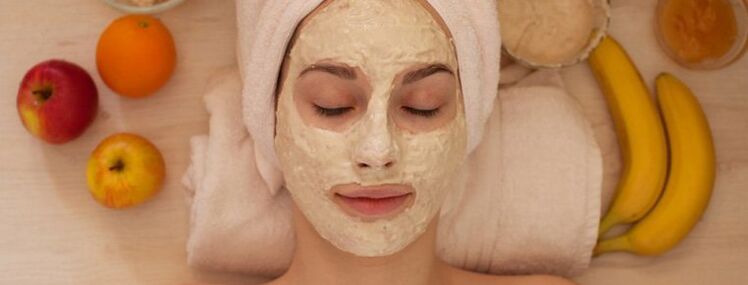
The cosmetic industry develops tons of masks and offers them for both professional salons and home use.However, facial masks made with natural ingredients, prepared at home, will always be preferable to factory-made options.
From the age of 25, girls should start taking care of their face and not only wash it with clean water, but also nourish it with various masks.Otherwise, improper care will manifest itself in early expression wrinkles and a noticeable deterioration in the condition of the skin.
What types of masks exist?
Normally, face masks are classified according to the effect they provide.There are types of masks:
- nourishing, moisturizing, toning and cleansing: they are designed for the constant care and maintenance of the skin in ideal conditions;
- anti-inflammatory, whitening, anti-rosacea - this group of masks successfully combats obvious skin imperfections;
- Anti-aging and lifting masks: they belong to the anti-aging group and help tighten the skin of the face.
How to determine your skin type
Before choosing a face mask, you must determine your skin type.In classical cosmetology, it is customary to distinguish skin types:
- fat,
- dry,
- normal,
- combined.
Since the needs of each skin differ significantly, a homemade facial mask should be selected according to the type you have.
As a rule, there are no problems with this, since girls are usually attentive to their appearance and their skin type can be easily determined even by looking in the mirror.However, sometimes difficulties arise.Therefore, to accurately determine your skin type at home, wash your face with regular neutral soap and do not apply any products to it.
After about an hour and a half, apply a well-absorbent paper towel firmly to your face.Carefully examine the napkin and evaluate the degree of oiliness of the skin:
- If there is a trace of sebum all over the surface of the napkin, it means that the skin is not tight at all and that you have an oily skin type.
- If there are no traces left on the napkin, but the skin does not peel off or feel tight, then your skin type is normal.
- If there are no greasy marks on the napkin, but you feel obvious tightness, then your skin is of the dry type.
- If your forehead, nose and chin are left with a fat mark in the center of the napkin, and the skin in the area where the cheeks and temples are applied does not leave traces (dry or normal), then such an uneven distribution of fat content indicates a combination or combination skin type.
Nourishing masks at home.
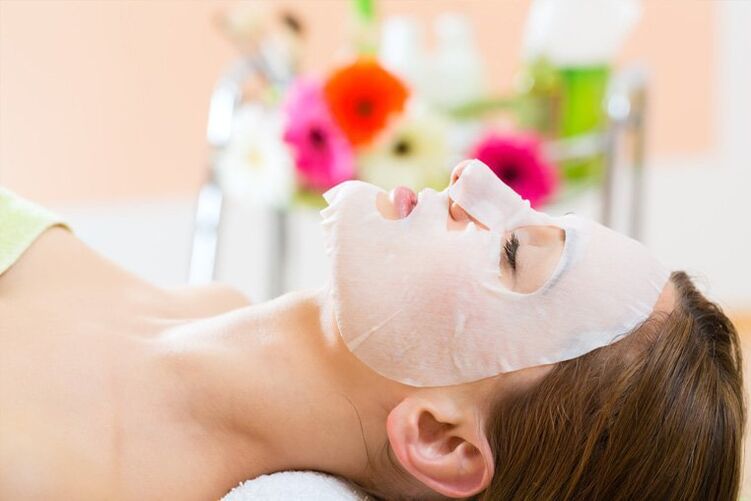
Nutritious masks are necessary to compensate for the lack of nutrients, vitamins and microelements in the skin.
Recipe No. 1. Nourishing mask for oily skin (honey)
For oily skin, a simple composition prepared with 2 teaspoons of honey, 20 drops of lemon juice and 1 tablespoon of low-fat sour cream is ideal.Mix all the ingredients in a bowl until smooth, apply the resulting mixture to your face.Leave it on for 20 minutes to half an hour and then rinse with warm water.
The mask will nourish the skin, give it uniform color, luminosity and beauty.
Recipe No. 2. Nourishing mask for dry skin
To nourish dry skin at home, take the following ingredients:
- 1 egg yolk,
- 2 teaspoons of milk,
- 1 tablespoon small oat flakes.
Pour the oats with very warm milk, let them soak for a little (10-15 minutes).Beat the egg yolk with a fork and add it to the cereal.Apply the mixture on your face and leave it for 20 minutes.
This soothing mask with deep penetration into the pores will nourish dry skin, relieve the feeling of tightness and peeling, leaving it soft and velvety.
Recipe No. 3. Nourishing mask for normal skin.
It is a big mistake to think that normal facial skin does not need nutrition, care or saturation of vitamins.A nourishing mask for normal skin based on grapes gently and gently cares for the skin and soothes it.
Crush 6-7 grapes of any white variety (in case of need, black can also be used), remove all seeds and peel, combine the grape mass with 1 tablespoon of sour cream.Apply the mixture on your face, keep it on for 20-30 minutes and then rinse with warm water.The mask is so nourishing that it can even heal skin irritations.
Moisturizing masks at home.
Natural hydrating face masks help maintain the skin's moisture balance.Most often, moisturizing is necessary in summer and spring, when, under the influence of ultraviolet radiation and ambient temperature, part of the moisture is lost from the surface layers of the skin.Even slight dehydration can lead to decreased skin elasticity, sagging, and wrinkles.
Recipe No. 4. Moisturizing masks for oily skin.
The following recipe will help moisturize oily skin.Beat 1 egg white and mix with 20 ml of liquid honey until smooth.Add 1 heaping tablespoon of chopped oats.Apply the mask to your face and leave it on for 20 minutes.First rinse with warm water and then rinse your face with cold water.You can replace the flakes with potatoes or starch, this will help close the pores and nourish the skin with useful substances.
Recipe No. 5. Moisturizing masks for dry skin.
Dryness is perfectly eliminated with a curd mask.
Dry skin especially needs hydration, not only in summer and spring, but at any time of the year.Mix about 30 g of regular cottage cheese with 2 tablespoons of milk, warmed to body temperature.Bring the mixture to a homogeneous consistency, without lumps.Apply the resulting mask to the skin for 15 minutes.Rinse with warm water.
Recipe No. 6. Moisturizing masks for normal skin.
To moisturize normal facial skin, use a grapefruit mask.To do this, mix the crushed pulp of two grapefruit segments with 1 egg yolk.Apply the mask to the skin for 15 minutes.Then rinse with warm water.
Homemade toning and cleansing facial masks
Cleansing and toning masks have a beneficial general strengthening effect on the skin, activate subcutaneous blood circulation and cleanse the pores of the face from sebaceous secretions, giving it a youthful look.
Recipe No. 7. Toning mask for oily skin
Oily skin is perfectly toned with a white clay mask.To prepare it, dilute 2 tablespoons of white clay in cold boiled water, add 1 egg white, 3-4 drops of lemon juice and 5 ml of honey.The resulting homogeneous mass should have a consistency similar to sour cream.Apply the mask to your face and wait until it dries completely.Wash off the clay mask with warm water as soon as it dries completely.
Recipe No. 8. Purifying mask for dry skin
Dry skin improves and cleanses noticeably thanks to the action of white clay.To prepare a mask at home, take 1 tablespoon of white clay, 2 times more milk and 5 ml of honey.Mix until smooth and apply to face.After 10 to 15 minutes, rinse off the mask and finally use a moisturizer after cleansing.
Recipe No. 9. Toning mask for normal skin.
Normal skin will quickly regain its freshness and elasticity with a lemon peel-based facial mask.Mix 1 yolk and 20 ml of low-fat sour cream, add the fine zest of 1 lemon.Keep the mask on your face for no more than 30 minutes.
Homemade whitening masks
Many girls dream of getting rid of freckles and generally whitening their face.At home, whitening masks will help lighten age spots, even age spots.
Recipe No. 10. Cucumber whitening mask is known to everyone for its good effect.Finely grate a medium-sized cucumber (seedless) and mix it with your daily nourishing cream or sour cream.Apply the mixture on your face for 20 minutes.Rinse with warm water.
Recipe number 11. The following whitening mask is quite liquid.At home, mix liquid honey and lemon juice in equal parts.Soak gauze in the resulting mixture, which you then place on your face.Leave it on for 15 minutes, then remove the wipes and gently rinse your face with water.
Homemade anti-aging facial masks
Over time, the skin begins to age;This is an inevitable process.But when the first problematic wrinkles appear, you should not be discouraged, but include a rejuvenation procedure in your regular skin care.Regular use of rejuvenating collagen masks makes it possible to delay the appearance of new age-related changes on the skin of the face and smooth existing small wrinkles.
Recipe number 12. A homemade rejuvenating face mask made from aloe is extremely popular.Combine a tablespoon of the juice of this plant with the same volume of nourishing facial cream and top quality vegetable oil (preferably olive).Stir and apply the warm mask, keep it on your face for 10 minutes.
Recipe number 13. In summer, you can make a mask from fresh banana leaves.Grind the leaves into a paste and mix them with honey in equal parts.If the mixture is too thick, like gelatin, thin it slightly with water.Keep this paste on your face for at least 15 minutes.Remove it first with a damp cotton swab and then rinse your face with cold water.And no botulinum toxin is needed.
Masks with a tightening effect for the face at home.
The fight against sagging facial skin requires constant attention from women over 30 years of age.Therefore, when the skin begins to fade, it is necessary to arm yourself with time-tested products that will help soften the upper layer of the epidermis.
Recipe number 14. This anti-aging vitamin facial mask is prepared at home with pharmacy ingredients.
Ingredients:
- 1 heaped tablespoon of pink clay,
- 1 ampoule of vitamin A
- 30 ml of green tea prepared without flavorings.
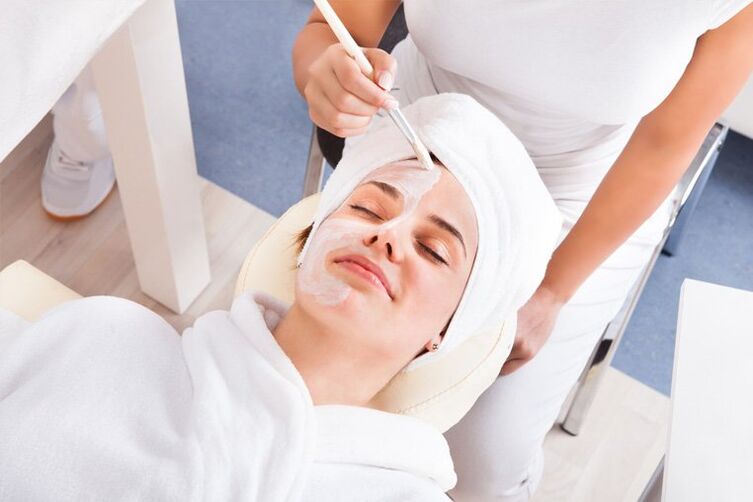
Gently dilute the dry clay with tea and, stirring continuously, bring the mass to a homogeneous texture.Add vitamin A and apply the entire mixture on the skin.The mask lasts 25 minutes.Regular use of this recipe restores the elasticity and health of the skin.
This mask should be washed with plenty of cold water.
Recipe No. 15. A natural and effective lifting can be observed in the white of a chicken egg.Beat one egg white until you get a strong foam and mix with two teaspoons of soaked oats.The exposure time of the mask on the skin is 15 minutes.
According to the girls' reviews, a lifting effect occurs - the skin is tightened.
How to properly apply a facial mask at home.
Before applying any mask, it is advisable to cleanse your face of decorative cosmetics with a mild makeup remover.A refreshing gel usually completes the makeup removal procedure, but you can use an additional peel.
A preliminary exfoliation of dead cells is desirable for good penetration of all the substances that make up the mask into the facial skin, this will ensure its greatest effectiveness.The scrub can also be used at home, for example using any coffee scrub recipe.
When applying masks, follow the general rules for homemade cosmetic compositions:
- The procedure for applying a mask cannot be done “on the fly.”Put aside all household chores and dedicate half an hour just to yourself.
- Any effective homemade face mask should be prepared (mix the ingredients) immediately before use.The remaining dough cannot be stored.
- All components of the mask must be of good quality and ingredients such as sour cream, fruit, kefir, etc.They must be fresh.
- Before applying the mask, clean your face as usual.People with oily and combination skin will probably also need to exfoliate beforehand.After cleansing the skin, open the pores as much as possible;You can steam them in a bath or make a warm, moist compress.This will allow all the ingredients to be absorbed as much as possible and have the best effect.
- To keep your hair out of your face, put it in a bun and secure it with something.
- Depending on the consistency, the mask should be applied with clean hands, a brush, gauze or cotton.
- Most masks should be applied not only to the face, but also to the neck and décolleté.An exception would be drying masks for oily facial skin, because in the neckline area the skin is much drier.
- Apply the homemade mask following the massage lines, making movements from the middle of the face to the temples.The exception is the skin around the eyes;It is not necessary to apply a mask.
- Rinse the mask with clean water.It is better not to take it from the tap, but to prepare a jug of boiled water in advance, cooled to body temperature.
- After washing off the mask, do not wipe your face;Gently blot excess moisture with a clean towel.Apply a cream suitable for your skin type on a damp face.
- Do not expect an immediate effect from the first procedure.Homemade face masks should be repeated regularly 1 to 3 times a week.The duration of the course must be at least 3 weeks.
Precautions when using homemade masks
For girls prone to allergies, before applying the mask prepared at home, be sure to do a test on the wrist or the inside of the elbow.If signs of an allergic reaction occur, take an antihistamine and do not use this product.